
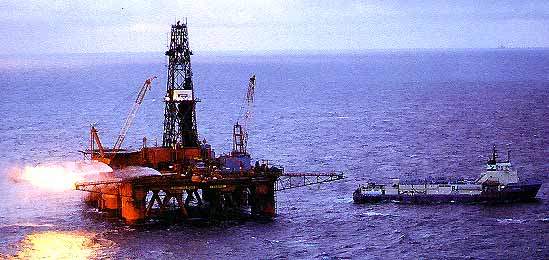
Åsgard North Sea Northern, Statoil oilfield project
The Åsgard oilfield lies on the Haltenbank in the Norwegian Sea, 200km from Norway and 50km south of Statoil's Heidrun field.
Designed around the problem.
“The expansion separating the rich gas from Åsgard into lean gas.”
The Åsgard oilfield lies on the Haltenbank in the Norwegian Sea, 200km offshore Norway and 50km south of Statoil’s Heidrun field. Statoil is the operator of the field with a 34.57% share. Statoil’s partners are Petoro (35.69%), Eni Norge (14.82%), Total E&P Norge (7.68%) and ExxonMobil (7.24%).
The field comprises the Midgard, Smørbukk and Smørbukk South deposits, which were discovered in 1981, 1984 and 1985, respectively. Water depths are roughly 240-300m. Midgard straddles blocks 6507 / 11 and 6407 / 2, while the other two deposits lie in block 6506 / 11.
Engineering that works in context.
Geology and reserves
The Smørbukk deposit is of the Jurassic age and consists of the Garn, Ile, Tofte, Tilje and Are formations. The Smorbukk south deposit is made of the Garn, Ile and Tilje formations. The Midgard deposit is divided into four segments with the primary reservoir consisting of the Garn and Ile formations.
The field has reserves of 830 million barrels of oil and condensate, and 212 billion cubic metres of gas.
Åsgard field development
“The Åsgard field comprises the Midgard, Smørbukk and Smørbukk South deposits.”
The Åsgard development consists of a monohull unit (Asgard A), for oil and condensate production with the world’s largest floating gas semi-submersible platform (Åsgard B). The other installations for exploitment of the fields are Åsgard C (a storage ship) and the necessary subsea production installations. These subsea systems are one of the most extensive in world, embracing a total of 52 wells, grouped in 16 seabed templates, linked by 300km of flowlines. Åsgard B was towed out to the field on 14 April 2000, and came onstream in autumn 2000.
In November 2010, the development partners agreed to invest Nkr1bn for the development of the Smørbukk North-East field. Smørbukk North-East was discovered in 2009 and is estimated to contain 15 million barrels of oil equivalent. Recoverable reserves are estimated at 5.7 million barrels of oil equivalent.
Smørbukk North-East has been developed as a tie-back to the Åsgard B platform. Production started in February 2012.
In August 2011, Åsgard partners submitted a plan for the development and operation of subsea gas compression to the Norwegian Ministry for Petroleum and Energy. The subsea compression will improve recovery from the Mikkel and Midgard fields, which are situated 40-50km from Åsgard B, by approximately 278 million barrels of oil equivalent (mboe). Start-up is expected in Q1 2015.
Production
The field produces 1.28bcf per day of natural gas, as well as 163,000 barrels of oil and 94,000 barrels of condensate per day.
Åsgard A oil production vessel
The Åsgard A oil production ship arrived at the field on 8 February 1999. This monohull is permanently moored to the seabed and provides a storage capacity onboard for roughly 907,000 barrels of oil. It can produce up to 200,000 barrels per day.
Oil is transferred, via a loading system, to shuttle tankers for transport to customers or terminals. Oil production began on 19 May 1999.
Åsgard B floating gas production vessel
Åsgard B is a semisubmersible, floating platform with process plants for the treatment of gas and the stabilisation of oil and condensate. Developed by Kvaerner / GVA Consultants in Gothenburg, the semisubmersible platform has been designated a Kvaerner GVA70. The fabrication was carried out under a $1bn turnkey EPIC contract, with Kvaerner.
The Åsgard B hull comprises a ring pontoon with six columns to support the topsides. It was built in Korea by Daewoo Heavy Industries, under an $85m contract. The hull measures 114mx96m and weighs 19,000t. The heavy-lift carrier Mighty Servant 3 transported the hull to Norway in a 45-day journey.
“Åsgard produces 1.28bcf of natural gas per day.”
Measuring 96mx114m, the platform B topside weighs 28,000t, and incorporates living quarters and processing facilities. It also carries operative deck loads of 15,000t.
Construction of the platform deck began at Kvaerner Rosenberg’s Stavanger yard. The two topside halves weighing a total of 33,000t were welded together, before being mated with the hull. This operation took place in the Amy Fjord in October 2001.
Åsgard C condensate storage tanker
The Åsgard C storage unit was built in Spain’s Sestao yard in Bilbao and arrived at the field in May 2000. Work then commenced pulling in and locking the condensate loading buoy. It was then connected via a flexible riser to the seabed flowline leading to the Åsgard B gas and condensate production floater located 4km away.
Measuring 264m long, the vessel belongs to Knutsen OAS Shipping in Haugesund north of Stavanger and has a storage capacity of 868,000 barrels.